
How do you get attention for science on social? Illustration by Paige.
Ten years ago, I would have had a solid answer (or what I thought was a solid answer) to this question. Gosh, the early days of science blogs and Twitter were so exciting, so promising. Ok yes, by then science sections in newspapers had already dwindled to meager numbers, but we scientists had the internet. We didn’t need the traditional gatekeepers.
Take up the mantle! The social web has democratized science communication and education, so use your voice and be heard! It’s never been easier to share scientific information with broad audiences. Start a blog, get on TikTok, share selfies of yourself doing science! Be the change!
Oof. I don’t give this advice anymore for so many reasons. In fact, I’m generally discouraged about professional, social platform-based science communication. And yet, I characterize myself as an eternal optimist! (I did just start a new science podcast that I’m pouring my heart into.) So what exactly is weighing so heavily on me about the field I’ve built my career in?
Why can’t I shake this fuzzy feeling of defeat?
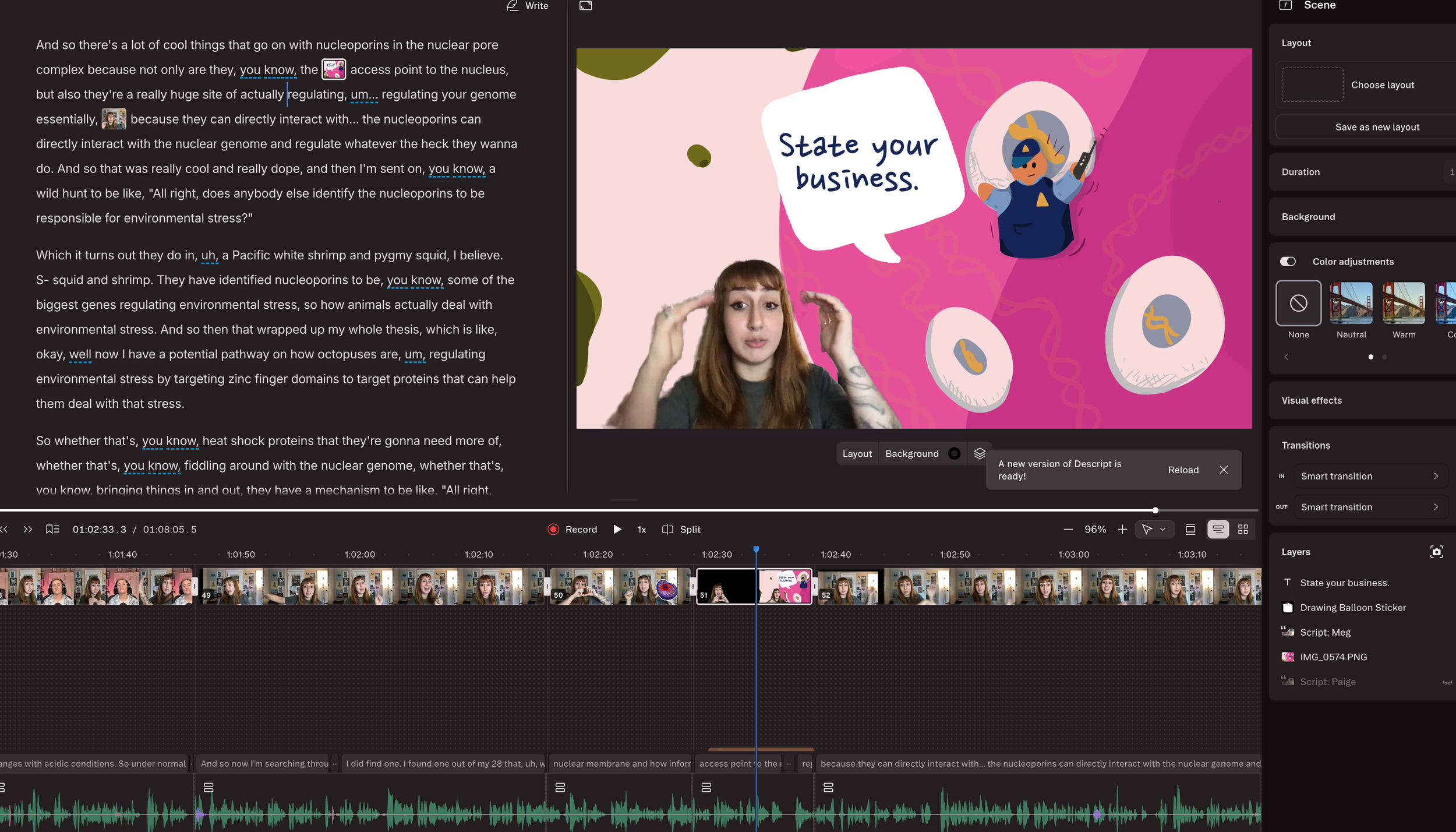
Interviewing scientists and hearing their first-person perspective on doing research and discovering new things is one of my biggest sources of joy in this life.
Partly, it’s that I've been on the job market three times in as many years, and I'm currently without a full-time job. It’s tough out there, and I’m not the only one. (Initially, while writing this, I fully digressed into what I’m looking for in a science communication job and why I’m frustrated… I’ve moved that to an endnote* to save you the pain!)
But I recently finished reading two books that have helped me understand where my feelings are coming from… and perhaps where hope lies. The first is Blank Space by W. David Marx.
In Blank Space, Marx examines modern pop culture since the early 2000s, arguing that commercial and technological forces have driven a period of creative stagnation, a literal blank space. He blames, among other things, digital platforms and a winner-takes-all attention culture that rewards popularity, metrics, and fame for their own sake. Whether there really is a blank space where the internet promised a long tail of creative innovation, or whether that long tail still exists but captures smaller audiences than we thought, is an open question.
Of course, the book made me wonder how this applies to science communication. For starters, the long tail, where anyone could have a voice, was an early argument for having scientists share their work on social media. But what if that’s a myth?
And then, how does creative, culturally relevant science communication (key to helping people deeply engage with science) fit into an omnivore pop culture that tends toward “bland uniformity and crass commercialism”? Incidentally, that “sea of sameness” is a major argument against using AI to generate content. How do you connect meaningfully with anyone when the only audience focus platforms tolerate today is everyone?
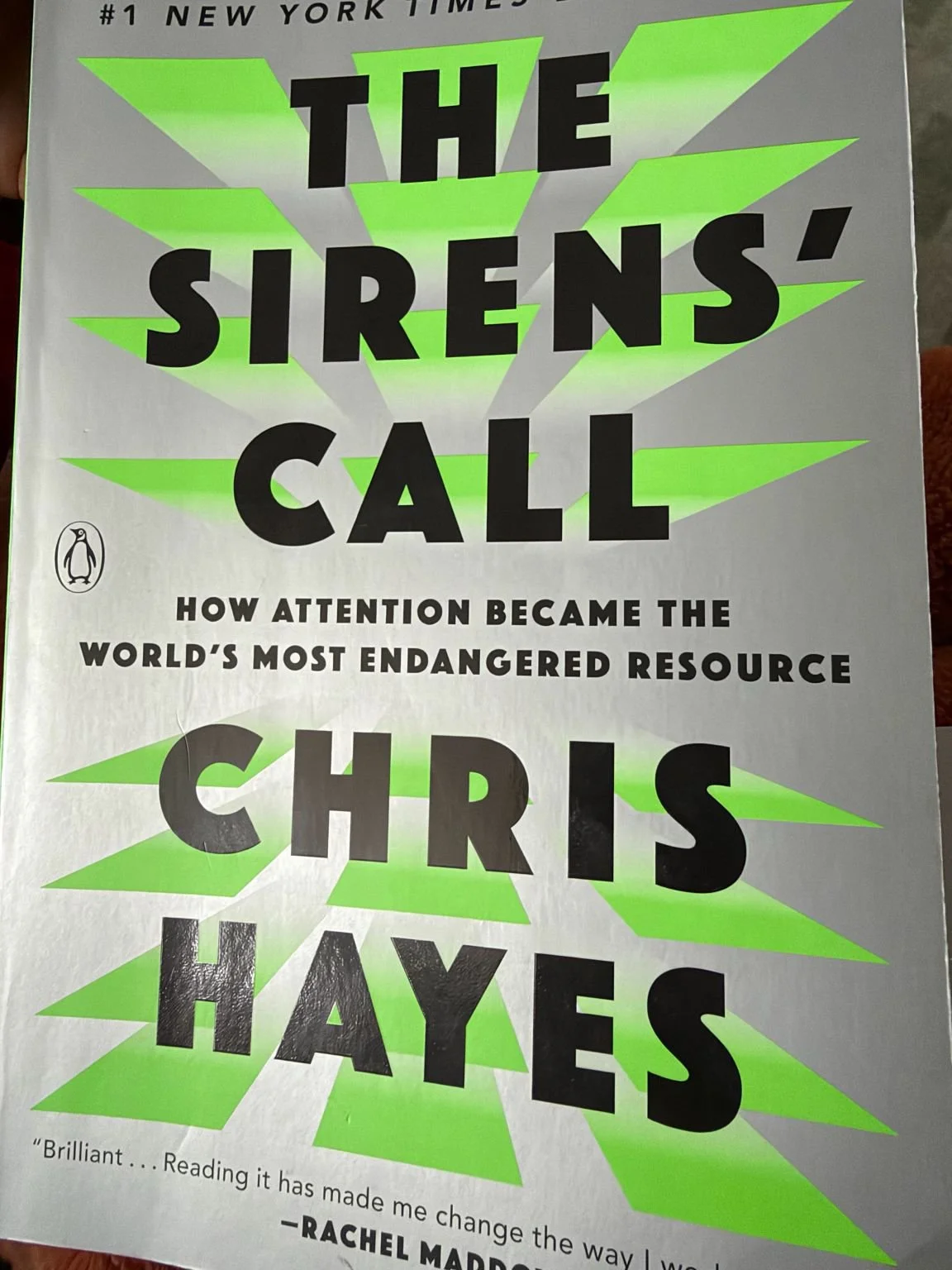
Photo of the cover of Hayes’ book
I mentioned reading two books. The second was The Sirens' Call by Chris Hayes. The author argues that big tech has accelerated the crisis of information overload and created a media landscape that increasingly extracts our attention against our will, by whatever means necessary. The result is an environment where everyone is shouting and flashing lights — sirens — that demand but rarely warrant our attention.
Meanwhile, we have less and less time and mental capacity for the things we ought to and want to pay attention to.
Hayes describes how I felt about using the internet and science blogs early in my career versus now. “The dopamine rush of finding some nugget of information, or some new corner of the mind palace under construction, was real,” he writes. “A huge amount of the activity of being online was hunting for information like treasure and then finding it. It’s the sensation I think people of my generation all end up chasing in the commercialized, synthetic form now offered through social media.”
Sirens everywhere, but where’s the quality information?
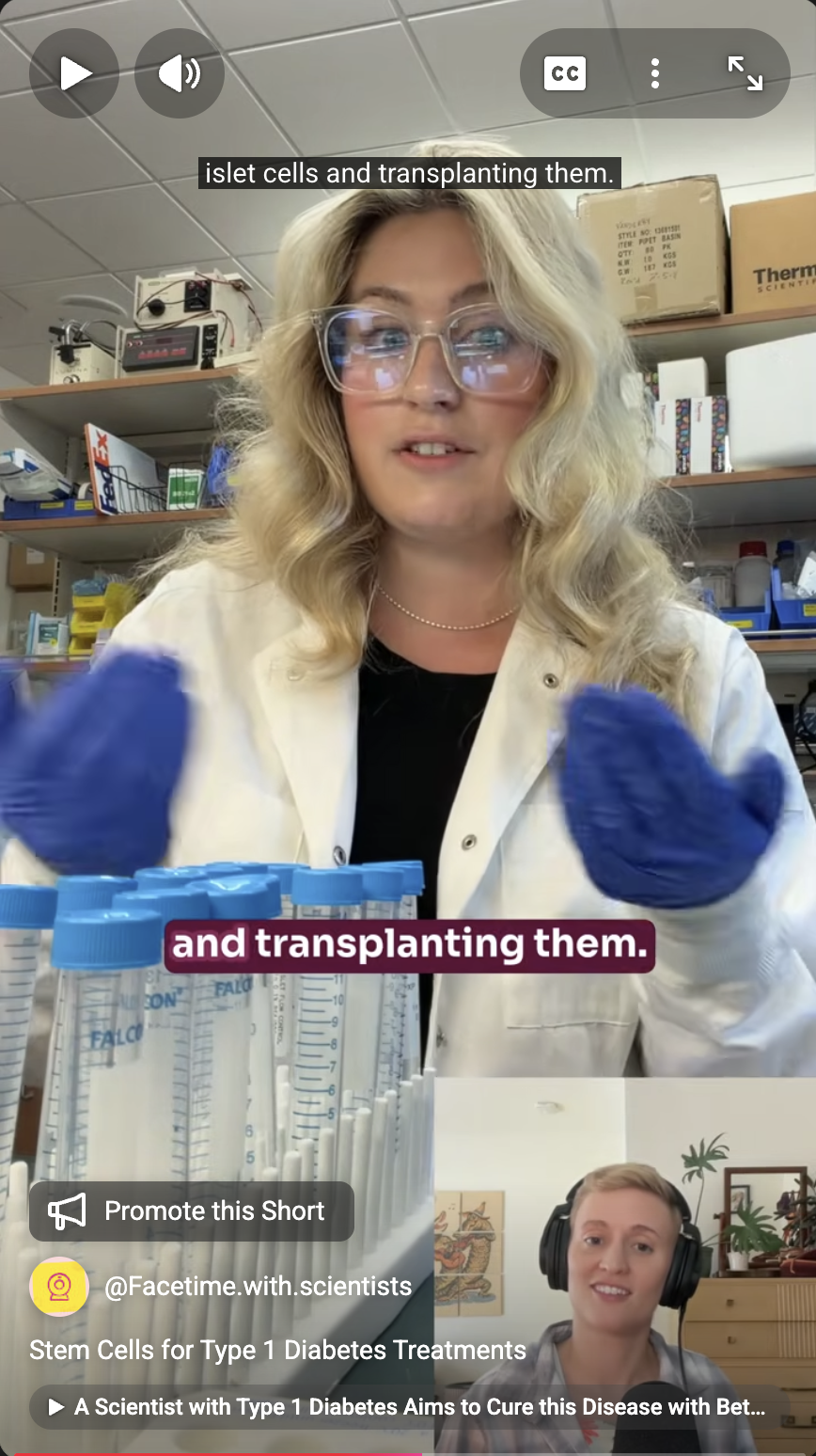
A screenshot from a short excerpt of my podcast interview with Caterra, a diabetes researcher.
I’ve seen some bright spots recently within the surging, nausea-inducing stream of “popular” and “for you” social media content. Many of those bright spots are young science and health professionals on Instagram and TikTok. An emergency veterinarian who’s attracted millions of followers on Instagram for her one-of-a-kind relationships with her pet patients, helping more people understand how emergency vet visits work, when to bring your pet in, and what to expect. A young diabetes researcher with 28k followers helping people understand type 1 diabetes, why developing a cure has taken longer than we thought, and what the science behind a possible cure looks like today.
But despite how prominent these bright spots seem in my little algorithmic corner of social media, they are likely more of the exception than the rule. Most scientists aren’t going viral, and not for lack of dedication and effort.
We (collectively, as in science communicators, and yes, I’m responsible) have encouraged scientists for years now to use social media to reach broader audiences with important messages about science. And to their credit, scientists have heeded these calls! I think they are doing some amazing science communication. They care about their work, and they want others to, too.
But is using social media for science communication making a deal with a devil? (As you may know, the devil usually comes out on top.)
Recently, I saw Sam Altman in an online interview say he can’t imagine going back to the time before AI, when he had to painfully look things up on his computer. I choke-snorted. It’s an absurd comment. And yet…
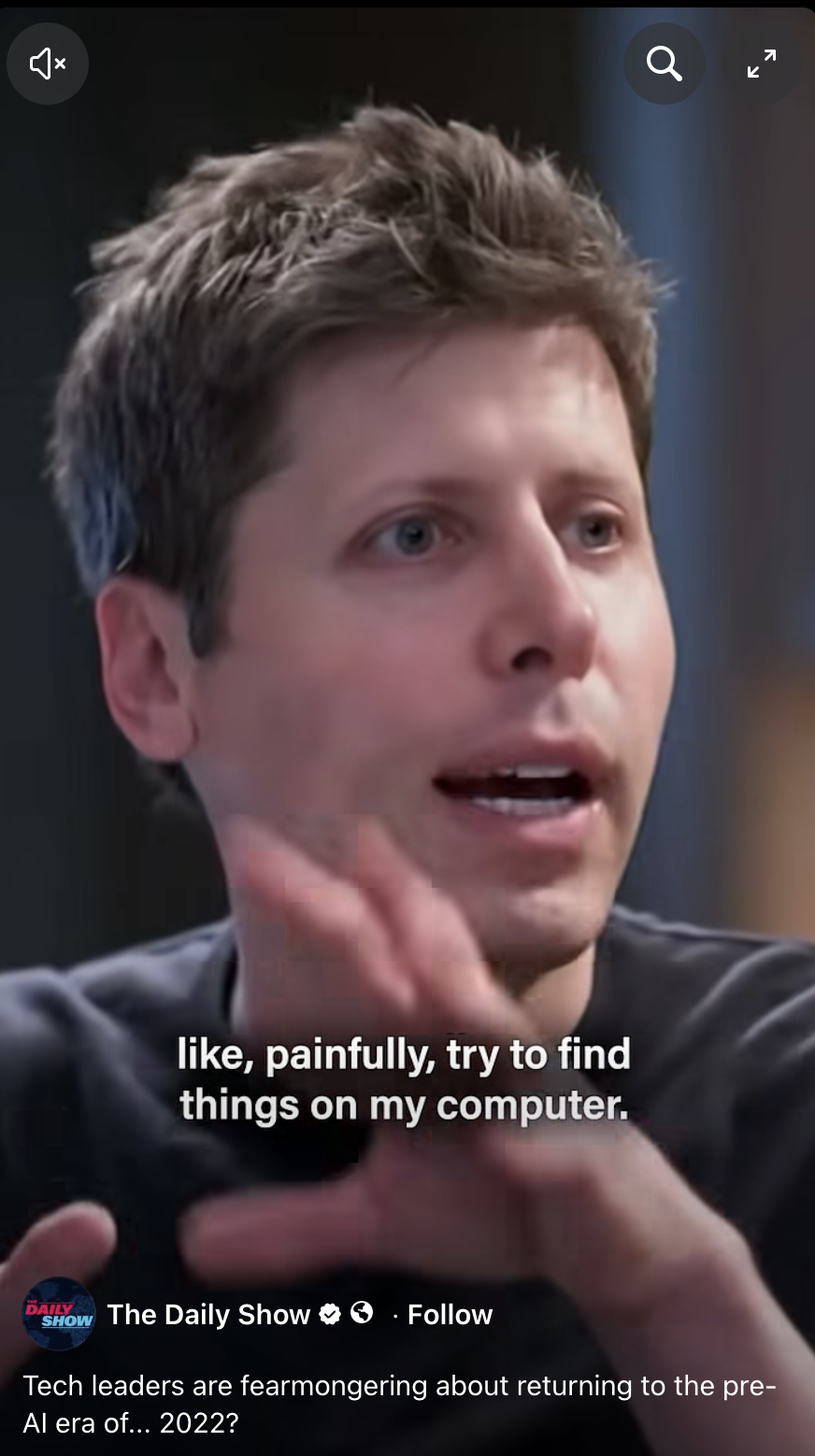
Screenshot of a clip from Sam Altman interview
Lately, we seem to have entered a new, deeper layer of the information age, or what Chris Hayes calls the attention age (because information consumes our attention). The flood of bits is so torrential that tech entrepreneurs like Altman are developing and selling us increasingly sophisticated tools to contain and filter the floodwaters. If even the techies are getting overwhelmed by the amount of data to sort through just to pull up their daily to-do list, HOW are we supposed to be reaching people with nuanced science news and information? Not only that, but we are largely relying on the same social platforms that feed this informational deluge and purposefully elevate the loudest, most attention-wresting voices.
The information age presents such a problem for the compute- and attention-limited human brain that we invented AI to help us deal with it. A promising solution: it aggregates, filters, and summarizes that which we couldn’t possibly consume solo. But remember the deal with the devil? It also generates. So prodigiously, in fact, that it could stay busy solely summarizing its own generated content. We are literally fighting fire with more fire.
The more content accumulates, the more social media platforms harness and learn from the loudest, flashiest, most sensational, most attention-grabbing content to wrest our attention from what we’d rather spend time on, Chris Hayes argues.
How do scientists compete with a growing sea of decidedly science-unfriendly content?
Sadly, I’m not sure they can… at least not individually, and not by playing into the systems, algorithms, and tools tech platforms created to monetize our attention. It’s not that people don’t want hard-hitting updates and quality science content. I think they do. But noise is drowning it out.
If every scientist took to social media tomorrow to share their science, would it even register for most people? Incredibly, it would likely be as a drop in a bucket. Over 5 billion people now use social media worldwide. Many of those people only “lurk,” but conservatively, there are still billions of social media posts and comments published daily.
Let’s say that tomorrow, every scientist in the world (UNESCO estimated about 8 million full-time scientists as of 2018) posted a story to social media about their science; their content would be less than 1% of all social media content that day. And very likely not the most attention-grabbing 1%.
Less than 1%.
It’s not that the promise isn’t there. Social media is the most widely used source of science information in most surveyed countries. On social media, people can “stumble upon” science information they weren’t actively looking for. And yet… I’m not sure that people aren’t more likely to encounter misleading information on a given science topic than accurate information. Sensational and false claims are more likely to go viral. Credentialed experts are the minority of creators of health content on social.
What’s next?
Oh my, I fear I’ve already overwhelmed you with negative information. If it’s hopeless, why did you bring me here, Paige?
But I AM the eternal optimist. I’m still doing and supporting science communication on social media because I love it, and I think plenty of other people do, too. As Chris Hayes pointed out in his book, it's incredible what people will pay attention to when given the chance. I think there’s something to be said for giving people the benefit of the doubt. That they WANT quality, even “slowly” made science storytelling.
So let’s reiterate the question I opened this post with: I want more people to pay attention to my science. What do I do?
To be honest, I don’t have a surefire answer. What I do know is that you likely can’t achieve this alone. We need to work together, scientists with community members, with one another, with journalists, with media professionals, with politicians, with artists. More DIY, AI-accelerated, big-tech-platform-distributed science communication just isn’t going to cut it. (BTW, 94% of social media marketers now use AI in their workflows. Like I said, fire with fire.)
Of course there is the content strategy answer. Tell stories. Be human. Use visuals. Don’t fall into the deficit model trap of “if they only knew X, they would support Y.” These are good tips, but they are necessary and not sufficient.
If there is a strategy answer that still applies to digital content in the current informational landscape, I’d say it's this: Build relationships and collaborate.
“Building trust is not really so much about the data that I present, but the glimpses of humanity I reveal.” - Morgan McSweeney, aka Dr Noc
There’s a reason that if you want more people to pay attention to your science, you might start with your family and friends. These hopefully include people who love you and care about you for who you are regardless of your science. So if you ask to share some science with them, they will likely pay attention. They want to strengthen their bonds with you.
I think the attention age and social platforms have led us to overlook the value of interpersonal relationships and relationship building in our science communication.
People trust and listen to the people they know: their family, neighbors, community members, and work colleagues. Maybe we need to return to hyper-local science communication and expand outwards from there.
I also know that collaboration is key. We HAVE to be working together. One thing that blows my mind is seeing young scientists with huge social media followings… and very little engagement or boosting from their own universities. Their universities often aren’t sharing their content or engaging with their platforms or audiences. I think many public research universities are failing to support their researchers in sharing basic science research and educating broader audiences. Why wouldn’t universities amplify, aggregate, boost, and harness their own researchers’ public science communication efforts?
Scientists need to work with artists, filmmakers, podcasters, media professionals, popular authors, non-profit organizations like Stand Up for Science, and others to build relationships and expand the reach of quality science content. The big tech platforms have lied to us — they don’t democratize attention. We have to find other ways to get people to join the science movement.
Endnote: *What I really want to do is help people understand and dive into basic and translational scientific research. And not just for some commercial or institutional bottom line. I believe having a fundamental understanding of what scientists do, what research looks like, and how knowledge is created across a broad range of fields has enriched my own life. It’s helped me develop a better “bullshit” meter for misinformation and make more informed decisions in my daily life, from the products I buy to the health advice I follow to the sources I trust. It’s also just been a source of joy and wonder that I want others to have!
But lately, trying to find a job where I can use my wide array of creative skills for this purpose… well, I can’t find it. I’ve been stifled in corporate America and disheartened by bureaucracy in federal science research, where I was specifically told that “we aren’t here to help people understand science” (I guess all they really wanted was to keep taxpayer dollars flowing by avoiding overly certain or potentially polarizing statements). I guess I’m echoing a commentary that Isabell May recently penned here, asking: Where are the professionals whose work focuses on engaging the public with science? Are we investing in them as we are in those who communicate science for commercial or institutional purposes?