
When scientists learn from and work with artists, everyone benefits
An artist residency program that embeds an experienced artist with undergraduate researchers in a summer research immersion program at UPenn has become increasingly collaborative and bidirectional, with both artist and scientists participating in the artistic process. The program serves as a new model for how future scientists and clinicians can become better communicators while collaborating with professional artists to engage communities in science. I interviewed the program director Carsten Skarke to learn more.
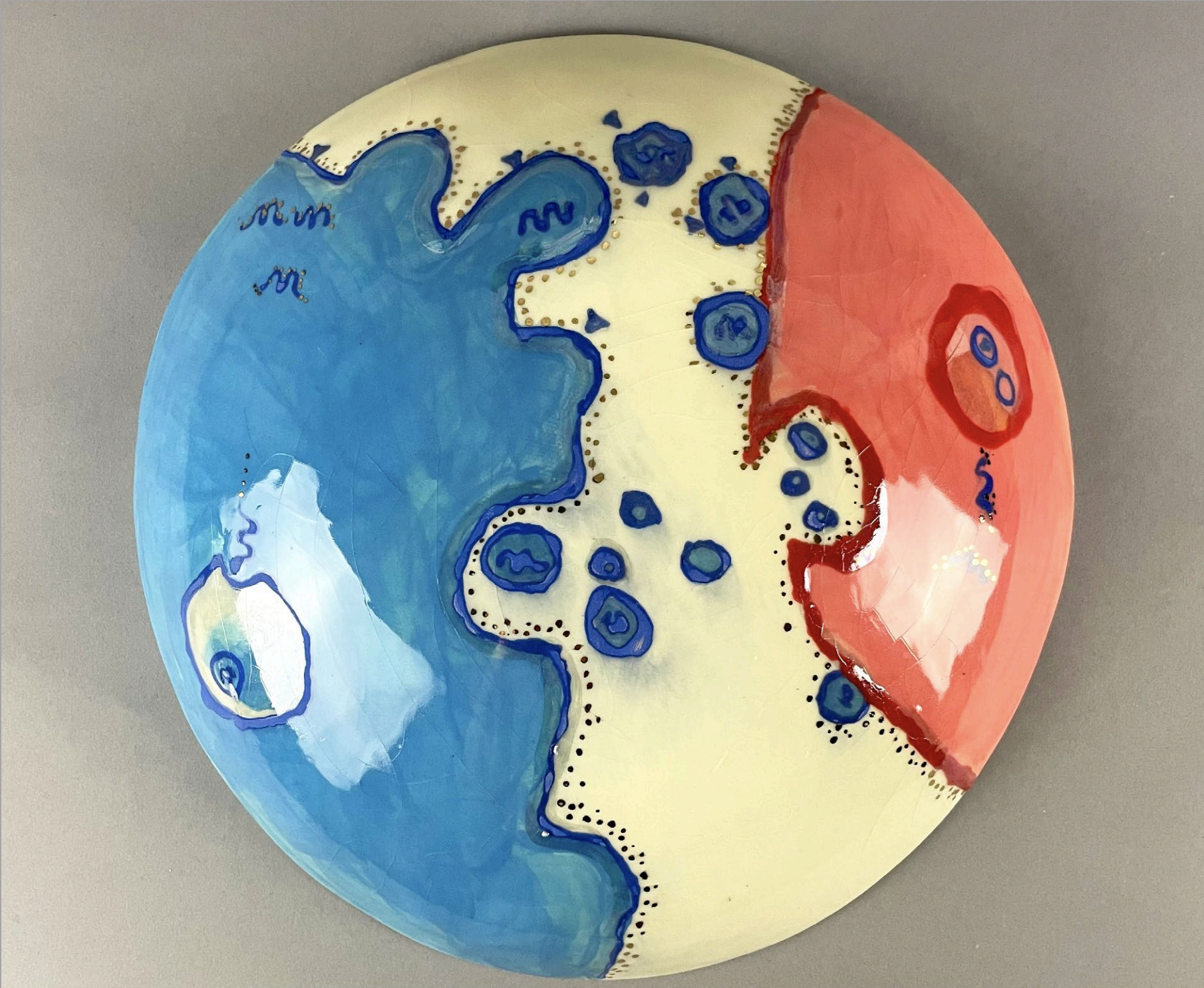
A student painting on a clay shield, sculpted and glazed by a UPenn artist-in-residence, symbolizes the fascinating journey of extracellular vesicles as they travel between cells, delivering their cargo and facilitating cellular communication.
Like many others, Carsten Skarke experienced the COVID-19 pandemic as a time of reckoning for science communication and public engagement with the scientific process.
“I was struck by how normal it felt for me to see science unfolding in real time,” said Starke, a research investigator at the Institute for Translational Medicine and Therapeutics (ITMAT) at the University of Pennsylvania Perelman School of Medicine. “I was relieved to see science unfolding.”
But Starke’s relief stood in stark contrast to public perception, anxiety, and hesitancy around emerging and changing guidelines, and vaccines some saw as rushed.
“I realized how poorly we have communicated how the scientific process actually works,” Starke said. “That triggered this thought, ‘Okay, so, how can we approach this better?"
Successful drug development, but what about communication?
In 2005, Starke’s mentor, Garrett Fitzgerald, founded ITMAT. This pioneering institute would blend basic laboratory science and clinical research. The institute would hopefully address the emerging “productivity crisis” in FDA-approved therapeutics.
“At the time, there were a couple of publications showing the decline in FDA-approved drugs while R&D dollars substantially increased,” Skarke said. “It was clear it was a broken model. That begged the question, how can we speed up drug development and successfully bring more therapeutic approaches to the bedside?”
A few years later, the National Institutes of Health (NIH) launched the Clinical and Translational Science Award (CTSM), a funding program inspired by ITMAT. Over the next few decades, Penn and collaborating institutions would receive millions in CTSM funding to continue their translational medicine efforts. ITMAT now includes around 2,500 investigators at Penn, the Children's Hospital of Philadelphia, the Wistar Institute, and the Monell Institute.
The initiative proved to be wildly successful. ITMAT became an incubator that brought together people with diverse areas of expertise to address complex problems, resulting in the development of now-famous therapeutic approaches, including CAR-T cell therapies and mRNA vaccines.
When Skarke joined ITMAT, his task was to develop a pathway program to train the next generation of translational scientists. Today, he helps run a summer internship program for ITMAT that matches undergraduate scholars interested in MD/Phd programs with specific labs at Penn or the Children's Hospital, where they work on a scientific problem in their budding domain of interest.
Skarke has now run the internship program for over a decade. But he noticed something in the first few years. While students gained incredible scientific and career insights during their internships, they would turn pale with nerves when it came time to present their work at the culminating symposium.
This, along with his observations of public anxiety around scientific research during the COVID-19 pandemic, led Skarke to brainstorm ways to help the next generation of translational medicine researchers become better science communicators. He wondered: could bringing an artist into the mix help?
The benefit of having artist friends
Starke, while not an artist himself, has several longtime friends who are artists. Talking to them and visiting their art shows, he said, he’s always been intrigued by how they look at things.
“They have a way of expressing, reworking, and deconstructing things, and explaining things differently,” Skarke said. “I started to realize that as scientists, we’ve been trained to take out our emotions because of how they may bias our research, even endanger it. Scientists without emotions… no wonder science has a public perception problem, right?”
But artists, in Skarke’s experience, are trained to do the opposite. Artists regularly foreground their own and others’ emotions and lived experiences.
“I thought scientists could benefit from that approach,” Skarke said. “It may feel kind of awkward to be emotional about your science, but it's necessary to create your narrative.”
Who better to teach budding scientists how to bring emotions to their research (in helpful ways) than professional artists? Skarke began pursuing the idea of an artist-in-residence for the ITMAT internship program.
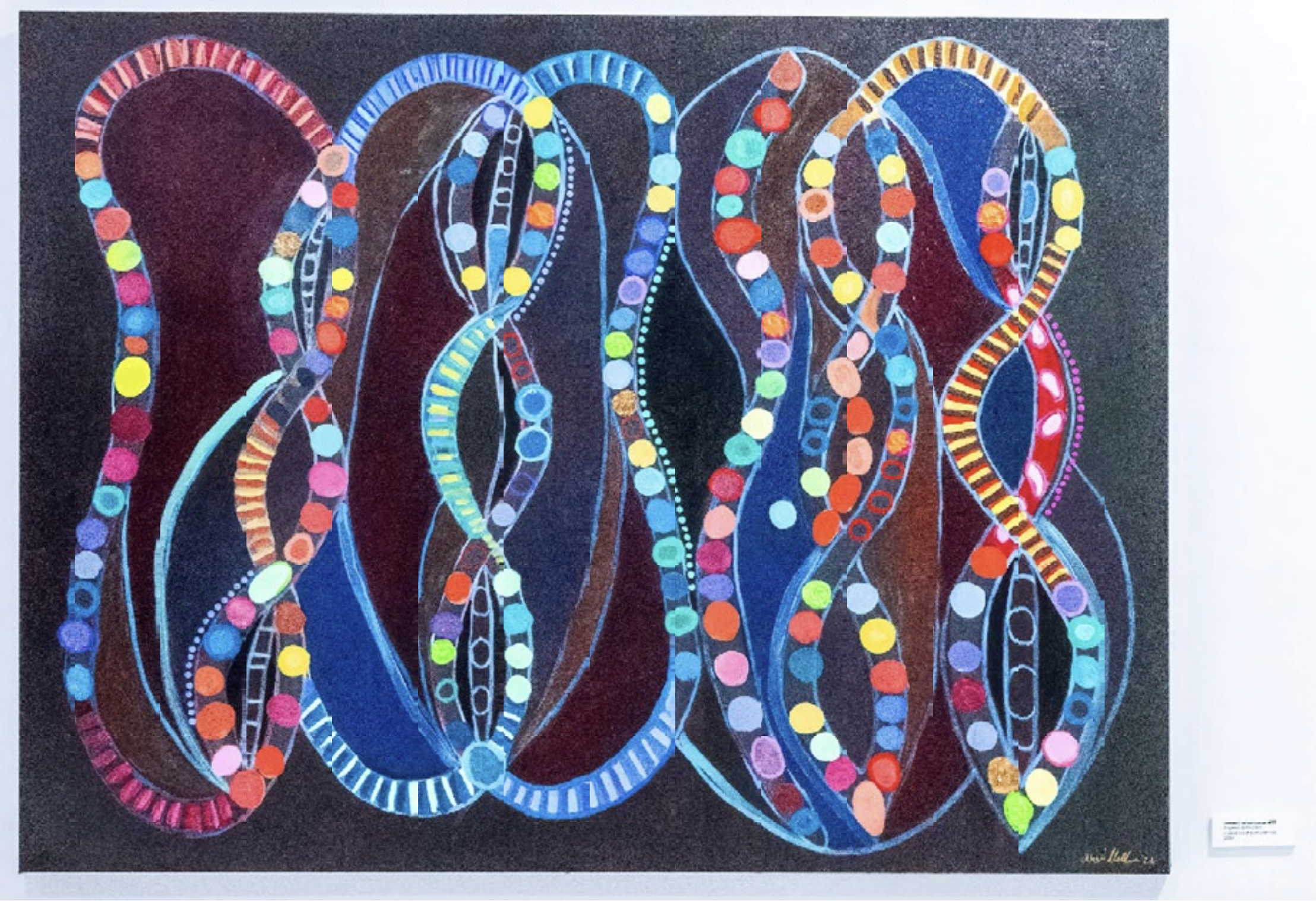
Painting by Angela McQuillan depicting an abstract expression of the intricate relationship between multiple genetic and environmental factors in the emergence of polygenic diseases like depression and addiction.
When artists are embedded in the scientific process
At first, the concept was simple: recruit an artist to participate in all summer internship activities and accompany students on lab visits. The artist would absorb as much as possible all summer, then spend the fall creating artwork informed by student research before sharing their work with students, stakeholders, and the public.
In its inaugural year, artist-in-residence Julie Rainbow visited labs, attended internship meetings and workshops, and talked with students. She then wrote a paper about her experience and created two paintings inspired by student research. While the outcomes were compelling, something was missing.
“We learned from the students' feedback that they enjoyed having the artist among them, but they wished for more interaction and participation in the artistic process,” Skarke said.
So the next year, the program brought in an artist who was also tasked with engaging students in science communication through a series of elevator pitch workshops and “science speed dating” events. The artist-in-residence, Angela McQuillan, organized a final exhibit showing her artwork, Rainbow’s paintings, and science-inspired artworks created by community members – including two internship alums who’d been inspired to create their own pieces. McQuillan also created a digital kaleidoscope from visuals shared by student researchers.
It was at the culminating art exhibit opening that year that Skarke had an epiphany.
“I became aware that we had flipped the roles: the artists were talking science and the scientists were talking art,” Skarke said. “And to experience that in person, in that room during the art exhibit reception, I was flabbergasted. I thought, ‘This is it. This is where we want to go.’”
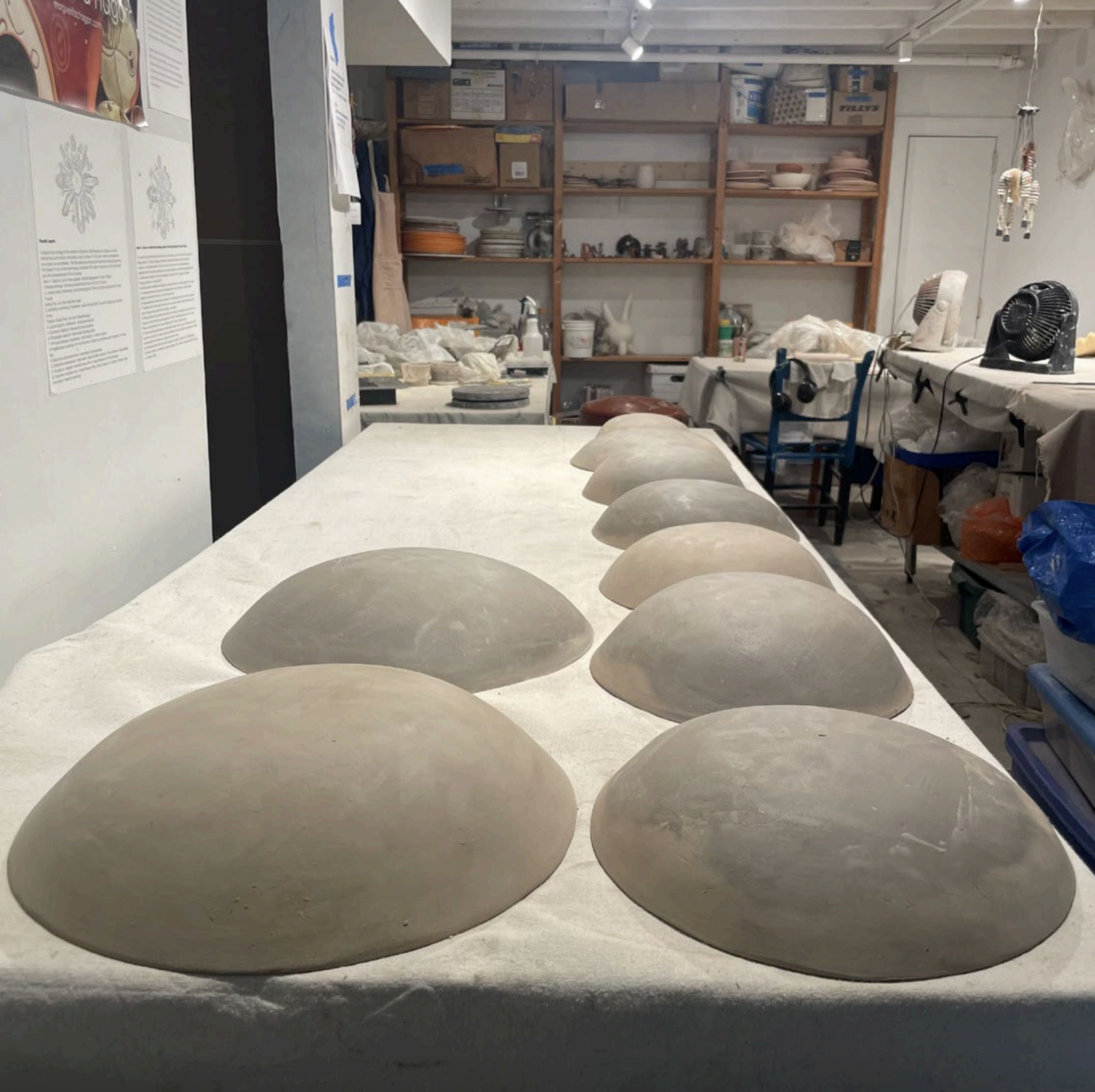
Unpainted clay shields
Going into the third year of the artist-in-residence program, Skarke knew they needed a mechanism to ensure students were deeply engaged in the art-making process throughout the summer. The artist in the third year was Marguerita Hagan, who specializes in sculpture. She had the idea to create clay shields or family crest-like sculptures for the students to paint with visual representations of their research.
“With Marguerita’s mentoring, all the students painted a shield, and many of their mentors painted one too,” Skarke said. “Marguerita even convinced me to make my own shield. I'm not an artist, and at first I was embarrassed… but with her guidance, I ended up getting a lot of feedback from established artists that they like my artistic rendering of my research.”
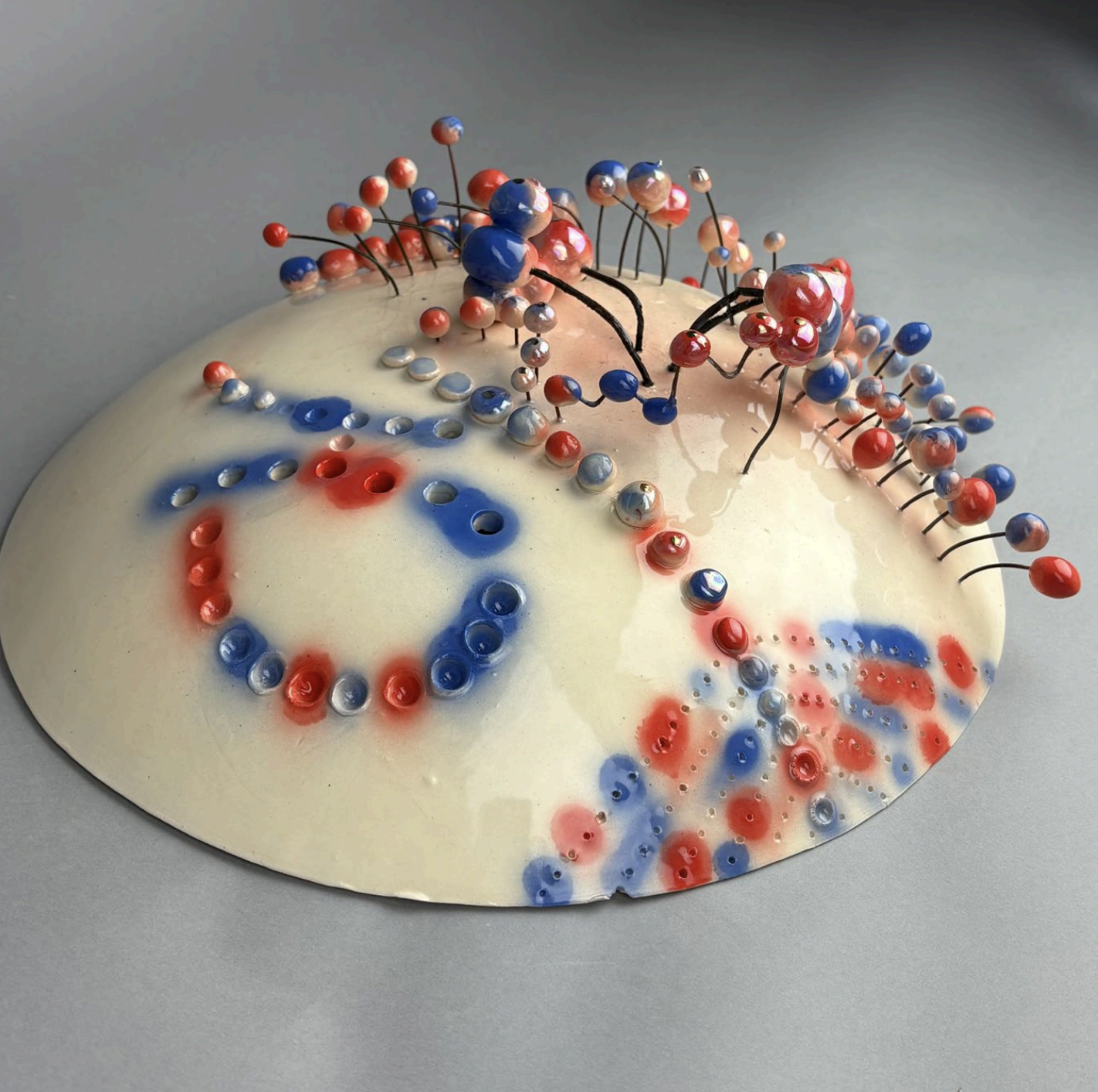
To study the human chronobiome, the oscillations of many physiological processes over a 24-hour cycle, researchers collect millions of data points from human volunteers. This shield symbolizes distinct data points coming together to form first letters, then a word, with a tribute to rhythmic patterns. Art by Skarke and Hagan.
Hagan has served as the internship program’s artist-in-residence for the past two years, 2024 and 2025. She has helped students think and develop concepts on how they can transform their research into an artistic representation, in this case, a clay shield that could represent a family crest or a protective device for human health. She also helped share the resulting artwork with the community by hosting the Philadelphia Open Studio Tour, during which over 90 attendees interacted with the 2024–2025 ceramic shields created by students, mentors, and program leadership.
Going forward, Skarke hopes to see every summer internship involve a collaborative process in which the artist-in-residence, students, research mentors, and even interested community members participate in creating science-inspired art.
But what about measurable impacts?
Any good research project involves testing, iteration, and measurement. Skarke is planning to collect pre- and post-program data on student experiences for the 2026 internship and artist-in-residence program, now that the program model is fully fleshed out. But there’s already some powerful anecdotal evidence.
Skarke has noticed that over the past two years of the program, students have been excited about and emotionally invested in the end-of-summer art exhibit, perhaps even more so than in the culminating research symposium, where they present their scientific work and findings in a more “just the facts” way. To him, this is evidence that the artist residency permits scholars to reconnect emotions with their science. At the same time, Skarke has observed that students are less nervous about presenting their research at the symposium than in years past.
“By the time of the symposium, our students are now seasoned speakers,” Skarke said. “They project greater confidence thanks to having undergone an intense exchange with an artist all summer and with other nonscientists at a large public art exhibit.”
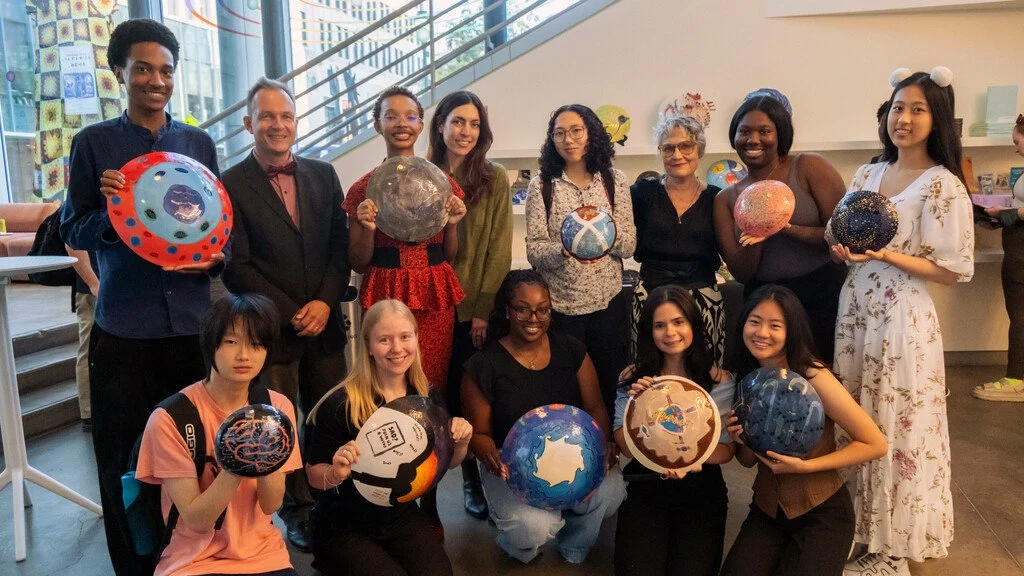
Students share their final artwork. Credit: UPenn.
But why exactly would working with an artist make these budding scientists better communicators? While it would take more research to know for sure, Skarke thinks it is because with the artist-in-residence, the internship students now have a creative expert from a domain other than science in the classroom and often in the lab with them. They are less hesitant to ask “silly” questions, and they are pushed to explain their science in more accessible language.
“I think the students really benefited from that,” Skarke said.
One student also expressed that they enjoyed experiencing the entire artistic process of creating their clay shield, from conceptualization to finishing and sharing, over the course of the summer.
“They said it was rewarding because they did everything,” Skarke said. They developed the concept, painted it, and presented it. So they felt, in contrast to their research project where they worked on a snippet of a larger project, more closure, this elevating feeling of success.”
*I personally relate to this so much – it is exactly why I got into science communication. While I was steadily working on a smaller and smaller piece of a scientific puzzle in the lab, science blogging on the side allowed me to grapple with bigger picture ideas and tell stories of scientific discovery.
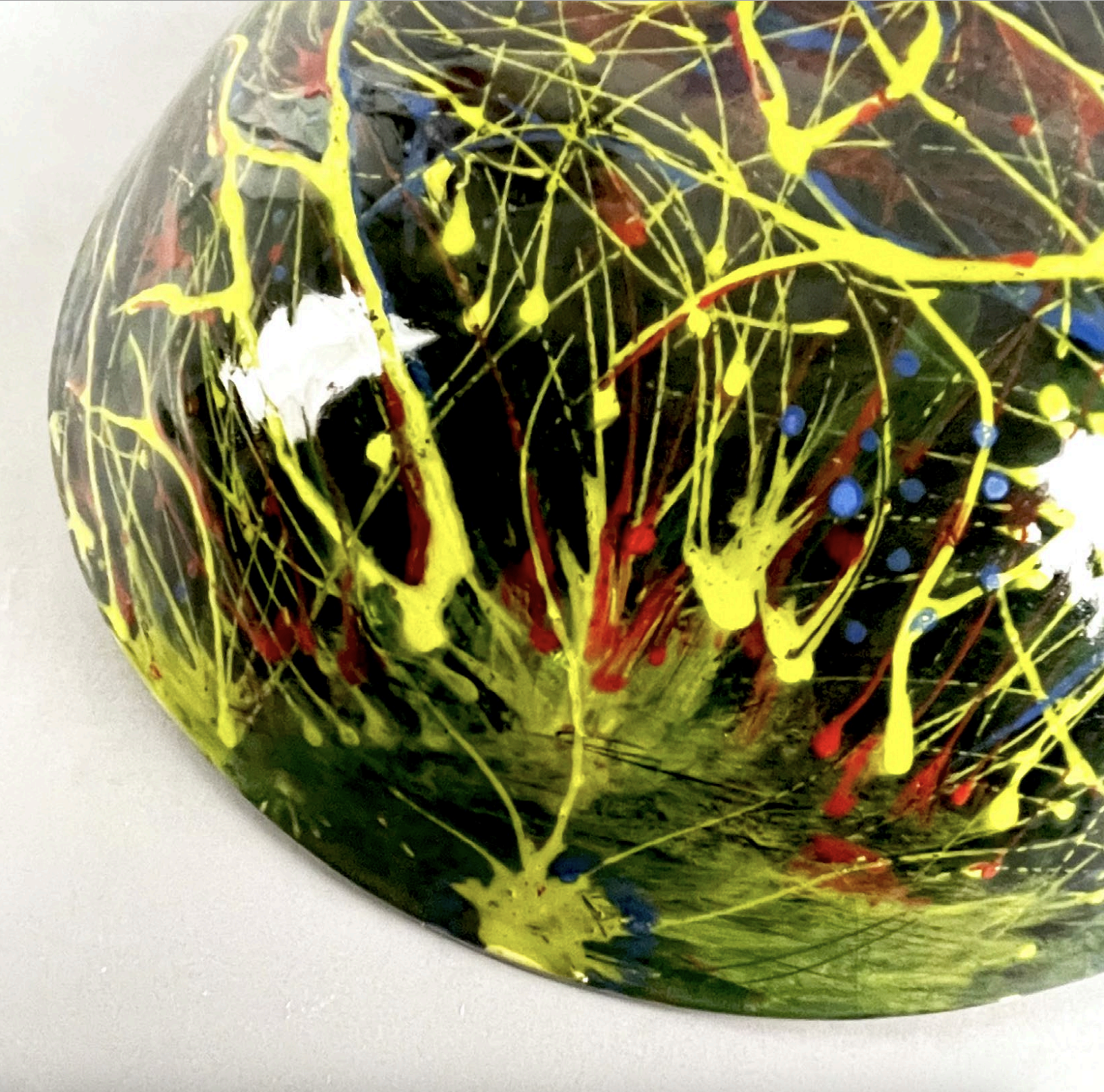
Neuronal Beginnings underscores the fundamental process of neuronal differentiation, which is pivotal in the formation of the brain. This abstract artwork on a clay shield evokes the staining observed in differentiating neuronal cells.
But the outcomes haven’t only been anecdotal.
“This year, we’ve received many applications in which the student specifically stated that the artist residency was a major draw,” Skarke said. “Another metric we are tracking is the number of students who stay engaged with their research mentor and lab beyond the 10-week internship program. That number has increased, so much so that we are now creating a continued engagement program where we support students who want to finish data analysis or other aspects of their projects even after they finish the summer.”
Takeaways: Art as a new vocabulary for science communication
At the conclusion of both the 2023 and 2024 ITMAT summer internships, 80% of the student alums (there were 13-14 interns in each summer program) indicated in survey responses that the artist residency enriched their experience. They talked positively about their experience translating their science into art with the artist-in-residence. These students also demonstrated “improved confidence and facility in using visual and narrative strategies to explain their work.”
Whether the artistic components of the ITMAT artist-in-residence program can meaningfully improve public trust in modern drug discovery research and its products remains to be seen and quantified. But more young scientists who can speak the language of both science and art is surely a net positive for public perceptions of scientists as good communicators! This perception is especially important for clinical and translational researchers who may work closely with community members and patients.
Skarke sees art as a multiplier of science communication. As he and artist-in-residence coauthors write in a recent case study published in the Journal of Clinical and Translational Science, art can create “shared experiences that humanize research and reinforce the social contract between biomedical science and the communities it serves.”
I’m excited to see more artist-in-residence programs at scientific institutions, and to see institutions understanding the importance of bidirectional collaboration with artists – collaboration that starts from the very beginning of the scientific research process – is a great move in the right direction.