
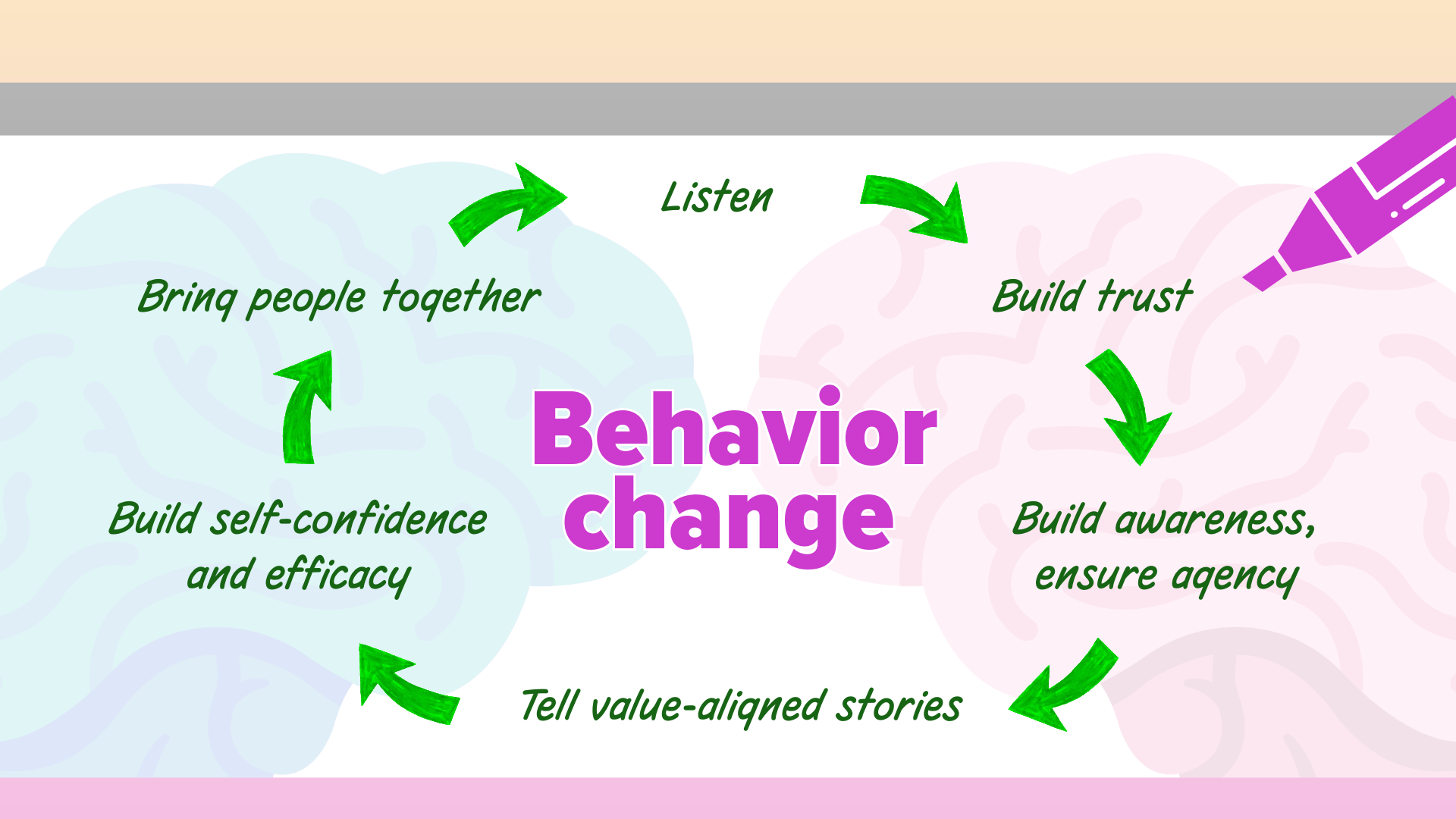
Help! I’m a science communicator aiming to change audience behavior. What strategies should I use?
There are many different goals that a science communicator might have: raise awareness, entertain, educate, inspire… But one of the most challenging goals is that of changing behavior.
The bad news: whether you are trying to convince people to adopt a health behavior, support or participate in a scientific initiative, take a pro-environmental action, or donate to a cause, information alone rarely leads to behavior change. This communication goal is not for the faint of heart – or the impatient.
The good news: Established models of behavior change, studied by psychologists, communicators, and other social science experts, can guide your efforts!
Learn more about the scientific theories, models, and terms underlying science communication and behavior change research at SciComm Lexicon!
Behavior change is a process. If you’ve ever set a New Year’s resolution, you know this process well. Contemplating change and deciding to take action are only the first steps. What follows is the hard work of following through, setting reminders, keeping yourself accountable, maintaining a conducive environment, and, hopefully, eventually making the change a habit. It’s also common for behavior change to be a one-step-forward, two-steps-back process. Try to extend empathy to your audience based on this!
“Communication is frequently treated either as a means of raising awareness or as a narrow campaign instrument, rather than as a mechanism that can mediate transitions between policy ambition and durable practice change.” — Mendoza, 2026
But let’s get down to strategies, based on scientific evidence!
Strategy: Listen
Listening is likely the most important step of communicating for behavior change. If it sounds counterintuitive, know that research shows individual behavior is shaped by existing knowledge, attitudes, habits, values, infrastructure, and social context. Communicators need to know, acknowledge, and message toward these factors. In behavior change communication, audience-specific initiatives and messages are critical.
Imagine building a whole communication campaign to convince people in a community near you to get a specific vaccine, only to find out this community has values or religious practices that conflict with vaccination. By not addressing this concern up front, you’d risk clear, accurate messages being swiftly rejected by community members.
(Insert here the problem that nonscientists traditionally perceive scientists to be competent, but aren’t as sure about their warmth, aka “does this scientist share my values and have my public interests at heart?” Can you see why value-relevant science communication is so important?)
In Muslim communities, there is a history of vaccine hesitancy and refusal linked to the use of pork products, which are prohibited under Islamic law. These concerns have led some pharmaceutical companies to develop and promote halal vaccines. Listening can lead to meaningful changes in what we are asking people to do. We can say, “get a halal vaccine that both protects you and your community and honors your faith,” versus simply “get this vaccine.”
So, get curious first. Take time to listen and learn about your audience’s concerns, constraints, values, and other factors that might impact their willingness or ability to accept your call to action. The time and effort you take upfront to listen will more than pay for itself in the end.
“To promote more equitable exchanges, scientists and science communicators should listen not only to tailor messages but to fold public ideas, knowledge, and concerns back into the scientific process.” — SciComm Lexicon, “Listen”
But also remember that listening can and should continue throughout your process of communicating for behavior change! Build in feedback mechanisms along the way!
“Sustainable change requires dialogue, feedback, and the co-production of meaning.” — Mendoza, 2026
Strategy: Build Trust
Listening helps to build trust, as does forming and maintaining positive relationships with audiences before we ask them to change a behavior.
Have you seen the movie “CODA”? If not, I highly recommend it – and bring some tissues. A Deaf family’s fishing business in Gloucester, Massachusetts, is threatened by strict catch quotas and federal regulations designed to prevent overfishing. The family’s struggles are heightened by a lack of accessibility accommodations when a federal monitor spends a day on their boat to monitor their fishing practices.
The film does a great job of showing how well-intentioned guidelines to prevent overfishing can fail to account for and accommodate the special concerns of small family fishing businesses, which are more likely to bear the brunt of ill-designed regulations than large fishing enterprises. But fishing and conservation don’t have to be at odds. Conservationists and wildlife science communicators can work to engage fishermen in efforts such as fish population data collection, habitat protection and restoration, and other citizen science and conservation projects that help prevent overfishing.
Community-based science communication and engagement efforts can build trust and can help inform more sustainable policies and regulations. Imagine, for example, if state and federal governments worked with small family fishing businesses from the start to learn and design guidelines that scaled appropriately. But this requires – you guessed it – listening!
“Institutions may disseminate technically accurate information yet fail to build the relationships and feedback structures needed for sustained uptake.” — Mendoza 2026
Strategy: Ensure your audience is aware of the “problem” and has agency to change
When it comes to risk communication, an awareness of the risk is usually necessary (although not sufficient) to inspire change. If a person doesn’t know they are at increased risk of breast cancer, for example, they probably won’t pursue early screening.
Raising awareness of a problem becomes important when people are disconnected from that problem in everyday life. Good conservation communicators help reconnect people to nature and to animals, plants, and ecosystems under threat. Helping people emotionally connect with the problem can be an important first step in behavior-change communication.
But more isn’t always better. Take the 2026 hantavirus outbreak on a cruise ship. An explosion of news coverage and social media content about the outbreak led to a lot of hype and fear around a virus that is not a major concern for the general American public, based on how it spreads. Many science communicators quickly jumped to create social media posts and videos explaining why people who hadn’t been in close proximity to cruise ship passengers didn’t need to be currently concerned for their personal health.
Or consider disaster-focused communication around the COVID-19 pandemic or “wicked” problems like climate change. Too much fear-based messaging can leave audiences anxious, overwhelmed, and ultimately “checked out.”
It’s important to communicate about risk with the appropriate level of urgency and provide clear actions people can take (or policies and infrastructure they can demand) to turn their concern into action. If there are limited actions they can take, fear-based messaging should be used with extreme caution (and ideally surgical precision, e.g. toward climate policy makers).
“Publics may recognize environmental risk while feeling little agency to respond.” — Mendoza, 2026
Strategy: Build culturally-relevant communication and value-aligned messages
If you completed step one to communicating for behavior change (hint: listening!), you’ll be better prepared to execute this strategy! If you really understand and have empathy for your audience and their environment, social context, values, interests, and culture, your communication messages and materials will show it.
For example, if you design a behavior-change campaign focused on healthy eating but fail to incorporate local or culturally important foods or food practices into your messaging, your efforts will likely fall flat. The communities you are communicating with may lose trust in you, perceiving you as not knowing or understanding their way of life.
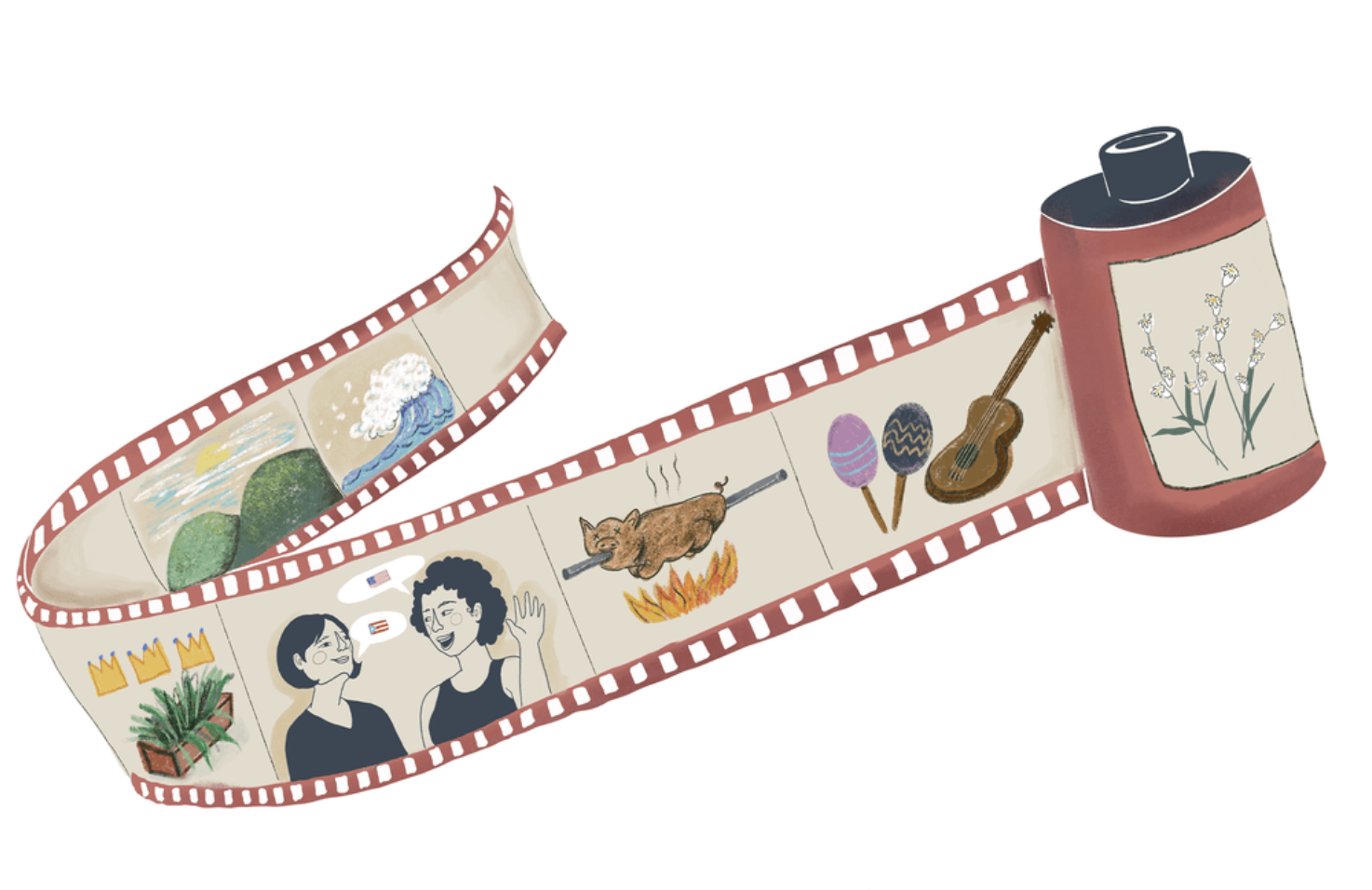
Art by Mya Pagan for visual storytelling course on culturally relevant science communication
I can’t offer anything more useful on this strategy than Mónica Feliú Mójer’s educational mini-course on culturally relevant science communication. Make sure your communication messages, strategies, visuals, and champions respectfully represent your audience’s culture, values, local environment, and lifestyle. Some ways to do this:
Create communication materials featuring culturally relevant analogies and local, familiar examples.
Make sure your audiences feel “seen” in your communications and visuals.
Work with role models, influencers, spokespersons, or communicators who reflect your audience.
Communicate in your audience’s language!
Take your audience’s values into account.
Check your biases, be humble, and keep an open mind.
Strategy: Support your audience in building confidence and self-efficacy
In a study of visual story-based educational materials early in the COVID-19 pandemic, I found that our audiences were highly aware of the problem and their risk of infection. It was their ability to protect themselves and prevent severe infection that they weren’t as sure about, which is why providing clear, specific, and visual calls to action was paramount.
If you don’t have confidence in your ability to take the necessary actions and can’t see how to go from resolution to reality, you likely won’t get far down the path of behavior change. For example, I’ve told myself so many times over the last few years that I was going to start a podcast or video series interviewing scientists. But ultimately, I wasn’t fully confident in my ability to execute. If I could have had a chat with a podcast expert who reassured me and gave me some actionable tips, it might have helped!
In the end, gaining experience recording interviews with scientists and practicing audio and video editing on the job gave me the confidence to try podcasting on my own. (I’m still terrified, but hopefully that fades with time!)
Consider how you can help your audiences build confidence and efficacy. Maybe even offer opportunities for them to “practice” the behavior you are asking for! Imagine a science communicator trying to recruit participants in a citizen science project. Could you offer a fun virtual training or another way for them to see what participation would look like in practice?
Strategy: Leverage social norms effectively
Norms are the shared, unwritten rules and expectations that guide behavior in a group, culture, or society.
“A social norm refers to information about what is ‘usual, typical, or standard’ in your social circle.” — The SciComm Lexicon, “Norm”
Social norms can drive our behaviors. In fact, we tend to underestimate how much social norms impact us. One classic example is littering. People who walk through a green space with trash or litter strewn about are more likely to litter there later. The opposite is true for people walking through a clean space. What is socially acceptable and what you observe as "normal" will affect your choices and behaviors in many areas of life.
I wince when communication materials aimed at behavior change cite a norm that runs counter to the desired action, or encourage an action while citing stats that indicate it runs counter to norms. There are a lot of examples here that essentially say: “Littering is the norm. Don’t be the norm.” This could be a communication strategy to enact legislation or community infrastructure that makes it easier not to litter (like adding more serviced trash bins in a park). But it isn’t as effective for an individual behavior-change campaign.
Communicators should consider social norms and how norms can interact with communication messages to drive behavior. For example, revealing that some behaviors are more common and acceptable than people think within their social group (such as seeking mental health therapy or reusing a bath towel several times) can help destigmatize those behaviors and drive behavior change!
“Humans look to others when deciding how to behave. Communications that highlight what peers or communities are doing can shift perceptions and encourage uptake.” — GOPA
Strategy: Communicate within communities and in ways to bring people together
The best approach to communicating for behavior change involves serving people’s needs for social connection, sense of belonging, sense of purpose, positive self-identity, mental engagement, and wellness, among others. Bringing people together and encouraging change that arises from community practices is usually better than prescribing change from the top down.