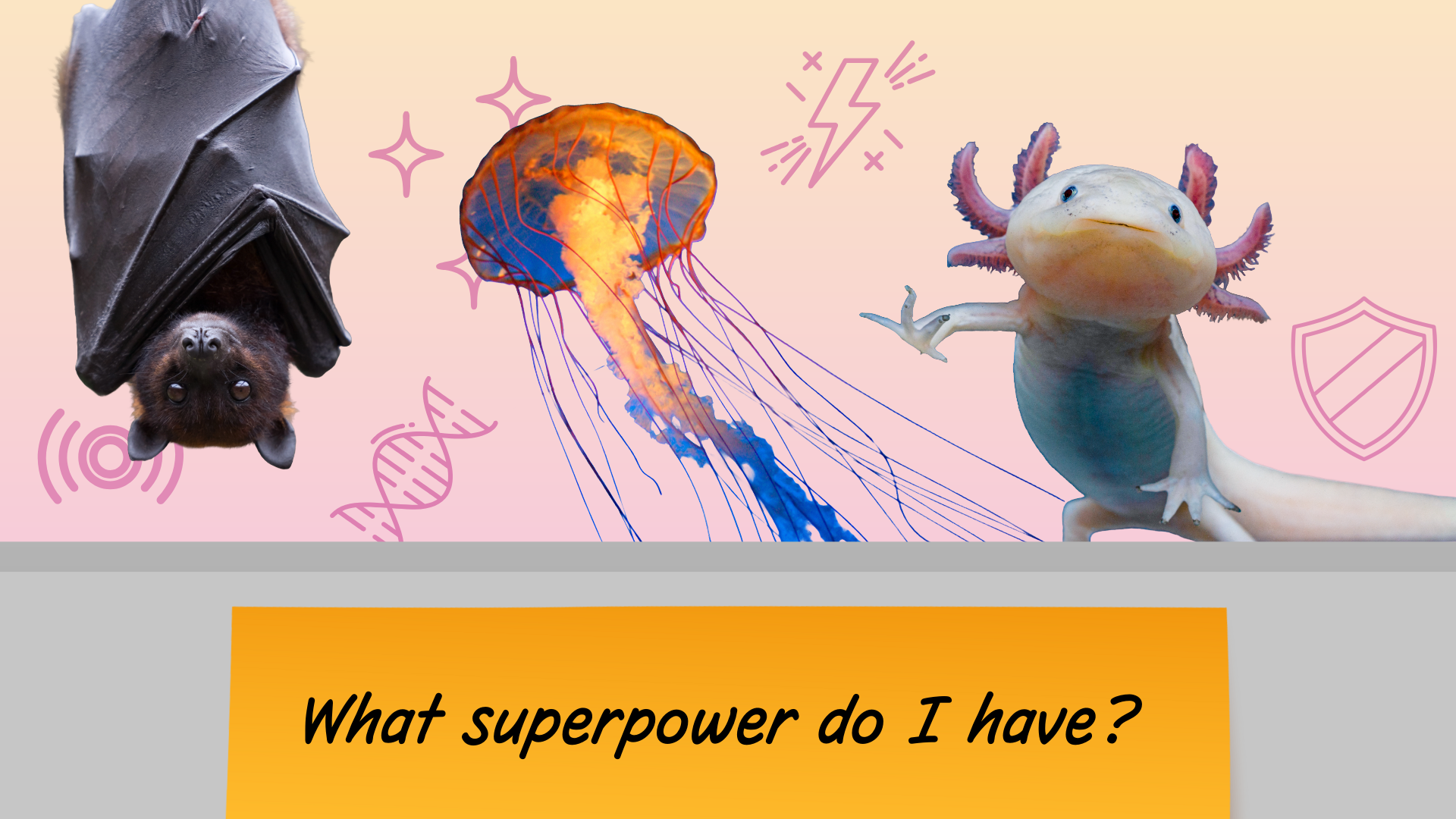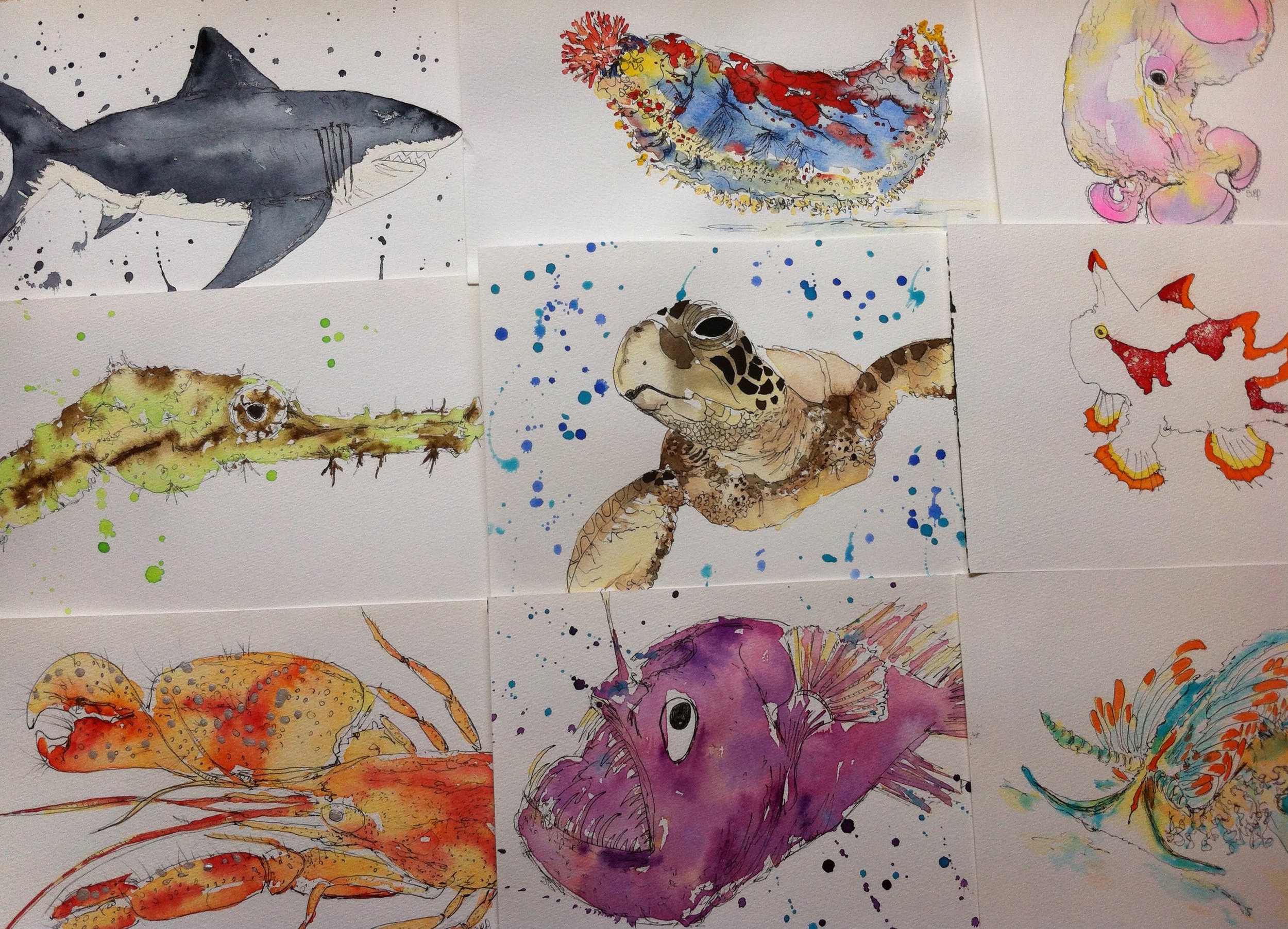
How can we better engage students in biology? Hint: Superheroes.
Alexander Eden is a biologist, science educator, and education scholar who is most adamant about having fun. He’s been teaching at Salem State University, but will soon join the University of Minnesota Rochester as an assistant professor of biology at the Center for Learning Innovation.
He recently published a fascinating teaching resource in the Journal of Integrative Organismal Biology, titled “Biology of Superpowers: A Curriculum Activity for Teaching Adaptation, Trade-offs, and Organismal Diversity.” The paper provides templates, a rubric, and other resources for an activity where college students explore biology and evolution through the lens of pop culture and superpowers.
I sat down with Alex to learn more about his background and approach to biology education. Learn more in the Q&A below!
How did you get into biology education research?
Alex: I started in biology, intending to become a high school teacher, and I taught high school biology for a time. Along the way, I knew I wanted to make an impact on students while also having fun. I wanted to get my students to love biology, engage with the learning, and realize that it's not this textbook experience they have to dread every single day. I think about it like this: if I think it's a fun idea, maybe they'll think it's a fun idea, right?
When I was a high school teacher, I would experiment with ways to have fun and bring in different ideas. That was really my first foray into science communication in the classroom. But during this time, the opportunity to pursue a PhD presented itself to me. I ended up leaving my job in Massachusetts and moving to Miami, Florida, to do my PhD down there. And that's really when I fell in love with biology education research. So I got to take my love for education and also discover that I love research as well.
How do you navigate your multiple identities as a biologist, an educator, and an education scholar?
Alex: I feel that I always find myself in these liminal spaces where I can see the silos. At times it's frustrating. For example, as a high school educator, I was trained in a lot of different pedagogical techniques. I brought these techniques and strategies to the college classroom. But then I would talk with colleagues who didn’t recognize that as a valuable asset. Even in the research literature related to higher ed… I'll read an article and be like, um, K–12 has been doing this for ages, so why aren't we bringing that more?
Beyond that, there’s a challenge I never anticipated. All my degrees are in biology, but I've always seen myself as an educator first. So even though I'm a biologist, I think education is really my strength and my identity, right? But what I find is, whenever I talk to a traditional biologist, they often don’t see me as a full biologist. And then whenever I talk to someone in education, they often don’t see me as a full educator. But like, I am both. And I can justify both.
I think from that, I've learned to accept that I am who I am and I'm going to navigate these spaces as best I can, but I will never compromise on what I want to do and what I'm interested in. So like, my students will always get the silly version of me. My students will always get creative assignments. My research will always explore what I want to explore and what I'm interested in. I'm grateful for that because I get to have fun. When I get to write an article that references Pokémon, it brings me joy.
I'm really grateful for the experience I had teaching high school because, really, I hate to use this phrase, but it toughened me up, right? Like teenagers will test you in ways that you just never anticipate. I loved it. But because of that, I also learned lessons: I need to be able to advocate for myself, for my students, and for the field. If I find myself in situations where I could let somebody shut me down, I don't.
For example, during my PhD studies, one professor had our class present on our proposed dissertation projects. I talked about my ideas for my education project. But in front of everybody, he said, ‘Isn't your project anecdotal? You don't even have a control group. Can you really make any conclusions?’
I could have just shut down. I could have just let that be. But I was like, well, in biology, you don't always need a control group, right? Like, if I want to study great white sharks, I can't just tell a great white shark, ‘Hold on right there while I look at your buddy.’ Right? He got defensive, but I saw it as an opportunity to educate not just him but everybody else in that room, because his bias might spread to others. And I wanted to make sure to limit that, especially if those other PhD students end up working with somebody in education. I don't want them to have these biases towards education.
Editor’s note: There are often practical, ethical, and logistical constraints to having control groups in education research.
What is the benefit of incorporating pop culture references and other creative assignments like “Biology of Superpowers” into biology education?
Alex: I think really the biggest strength is in that engagement. For example, I have an assignment in which I ask students to analyze a pop culture universe through the lens of evolution. I’ve found a higher level of engagement with that. I think it's because students have their interests when they step into the classroom, right? Biology might just be a small interest in their lives, but they have all these other interests they've probably had for many years, even before they went to college. So as soon as you say to them, "Hey, you can connect this to your favorite video game,” it's like, wait a minute. I've been playing this video game for many years. I've never thought about this through this lens.
I had a student this semester who analyzed Zelda through the lens of evolution. They had this amazing analysis where they took one of the, I guess, species in the universe and another species in the universe, and created this phylogeny to explain how they are descendants from this ancestral species. And I was like, whoa, I did not see this coming. It was an amazing theory. And he said that even though he spent a lot of time completing that assignment, he didn't feel like it took a lot of time because he enjoyed it, and it actually helped him connect to his already existing interest. That's where we can hook students and really get them engaged.
My Biology of Superpowers assignment is another one that the students really enjoyed. Coming up with that assignment, I was like, "How do I get students to think about the superpowers that exist out in nature?” Everyone knows that there are a lot of cool organisms out in nature, but the ones we talk about tend to be the ones that are more charismatic, right? Orcas, orangutans, elephants... but there are so many other cool creatures out there that are just as cool. There’s the mantis shrimp, tardigrades, and animals with echolocation, like the beluga whale in Finding Dory.
This assignment was really meant to encourage them to think about other cool traits out there in nature. And I also wanted them to not only engage with it and think about it from a biological perspective, but also connect it to a pop culture universe.
I had students research an organism, and research the trait they are interested in. I found that they definitely engaged and built their understanding through this assignment. They were able to connect multiple ideas. At the end of the semester, when I asked them to reflect on the semester and what they liked and didn't like, this was one of the assignments they brought up as helping them see the concepts in a different way.
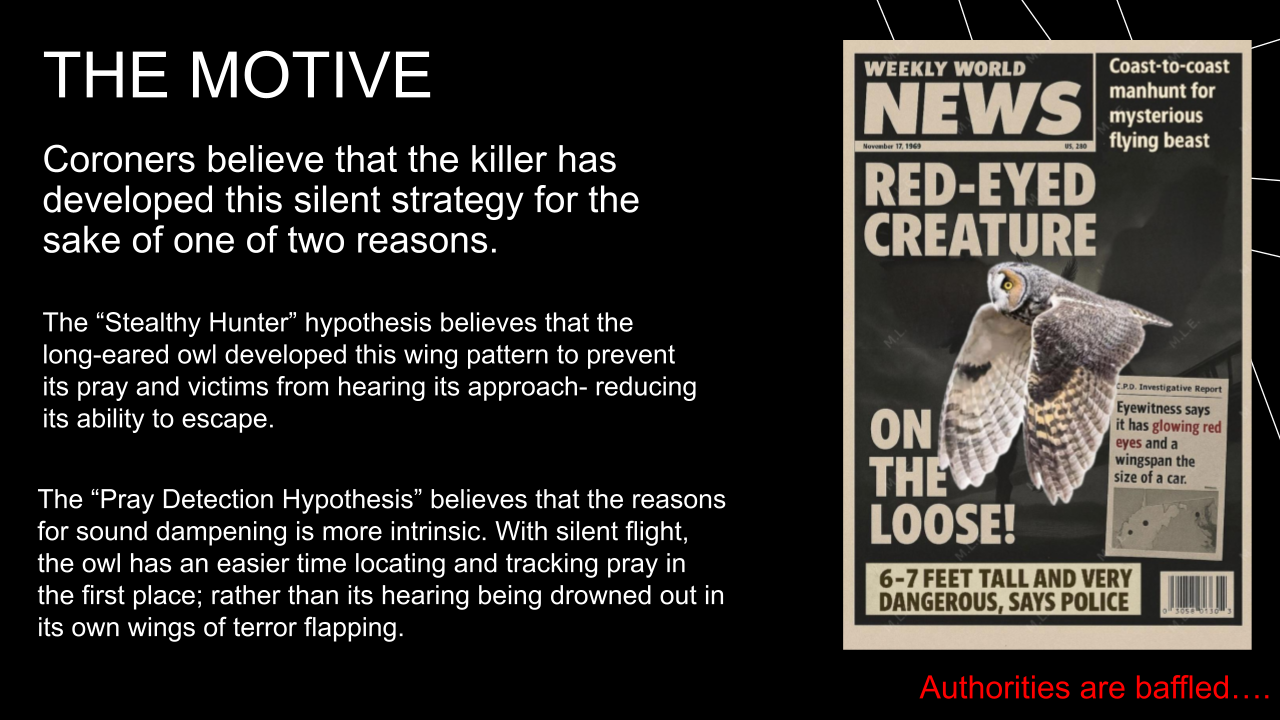
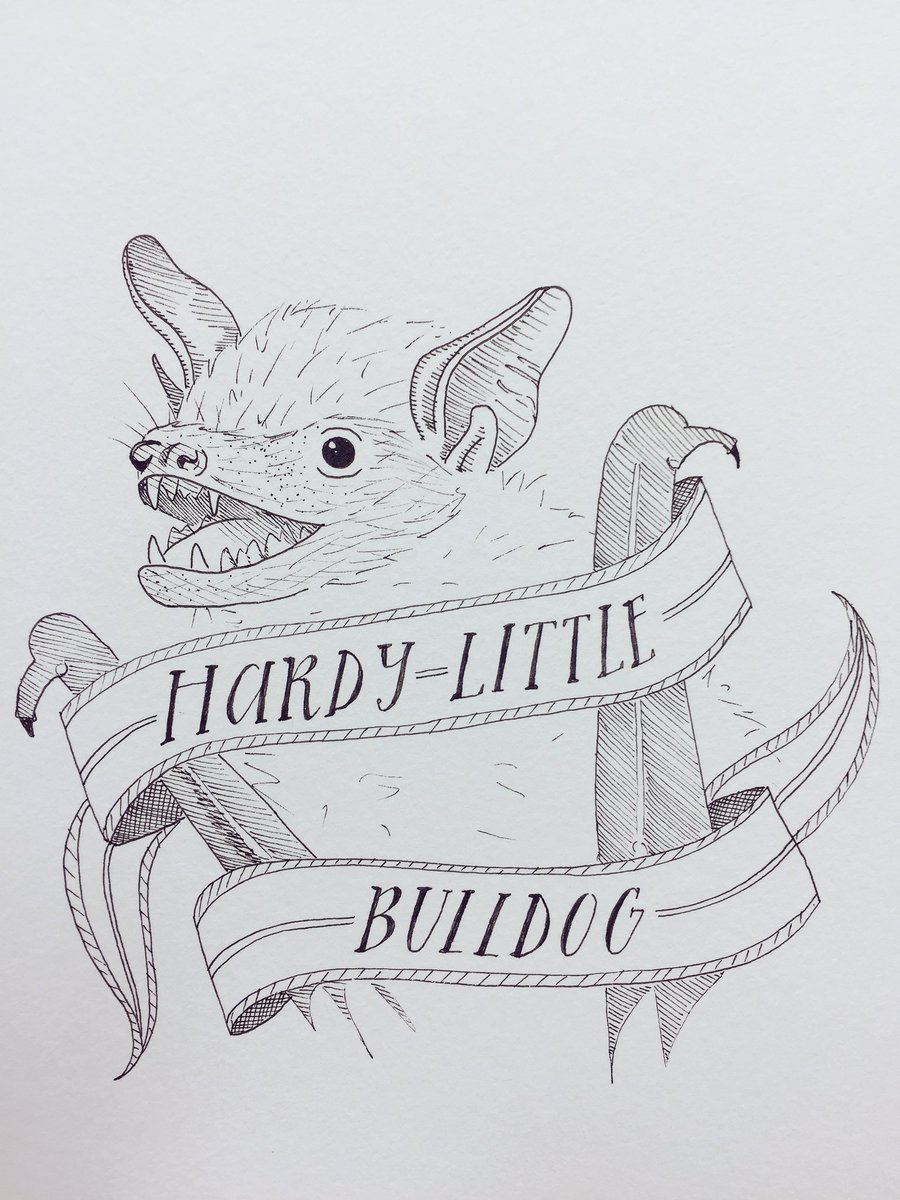
An example slide from a student Superpower assignment
One of my students said they were excited to learn an example they could then teach their friends, to connect back to the science communication bit. So they were able to see the value in that, like, hey, now you can go to your friend and be like, let me talk to you about bats. Right? And this is how they're affected because of human activity.
And I've done this connection to pop culture in small capacities, too. Like, when a new movie comes out, I'll tell students, "I watched that movie last week. Let's talk about.” And I think that really, really helps because you're leveraging that student interest.
And the thing is, for many students, that interest may also be tied to their identity, right? And there's a lot of work in terms of identity [and science education].
What do you mean by that, the identity-connecting?
Alex: We often talk about science identity, or Latino identity, etc. But at the end of the day, a student might be like, ‘I am an anime dweeb, right? I love anime; anime is my life. I go to anime cons, I make cosplays, I do all these things. But as soon as I step foot in the biology classroom, I have to put that all behind me.’ Right?
But now, if they can talk about anime in biology class, they can take all that excitement they already have and apply it there. So students already have that excitement. Allowing them the flexibility to use that is like letting them really use their strength. Most of the time, we focus only on the biology skills, but there's so much more that students have and can bring in. If you give them the opportunity, they'll run wild with it. I get excited to see what they create.
How do you incorporate the idea of science communication in your teaching
Alex: Right now, I think the most frequent communication about science is the kind that goes against science. The average person will hear that before they hear from a scientist. And I think the more we can do to counteract that, the more of an impact that will have.
So that led me to create projects [to get students to think about and practice science communication]. I have an ambitious project I'm still refining: students take a photo of something they see in the real world and then use it to tell a story. I think National Geographic does an excellent job with that, like capturing stories through photos. I'm still fine-tuning that one.
But I try to instill in my students that there isn't just one way to communicate science. One person might be engaged if you take a science concept and apply it to Pokémon, right? But another person might not be engaged in that way. So how do we get that other person? Is it going to be another pop culture reference? Is it going to be Star Wars, or is it going to be something completely out of that realm? Is it going to be, hey, like you live right next to that forest that you walk through every single day, right? This is how these ideas connect to that forest. That’s about learning about your audience in addition to communicating.
What is your advice for others in your field?
Alex: Make sure you're having fun and that you are happy, because if you're having fun and your students can have fun too, it's like a mutualism taking place, right?
I have my interests: I love movies, I love video games, I'm a little nerd too, and I didn't want to leave that behind. And if I left that behind, then I would question who I was. So I feel like every day I get to be my authentic version. And then I get to model that for my students so they can also be their authentic selves, too. There's a lot of power in good vibes and positivity.